FORT LAUDERDALE, Fla., Jan. 8, 2019 /PRNewswire/ -- CarePredict, the leading digital health company that provides preventive healthcare solution for senior adults announced today the launch of their direct-to-consumer product, CarePredict Home, at CES 2019, the world's largest consumer technology show.
When Pew stops tracking senior adoption, does that imply a market saturated? Note this Fact Tank aggregation of technology adoption statistics (tech overall among seniors, last reported in 2016) – and the most recent data cited on Internet use, seniors were quoted in a 2016 survey, 44% of responders did not use the internet. Of those that do, older adults aged 65+ said they had little to no confidence in their ability to use electronic devices to perform online tasks. Let’s think about their non-confidence (not broken down into the 65-74) and the 75+ who are the Real Seniors.
Scammers are creative – each cell phone number is a 'smishing' opportunity. It's the holidays, when scammers want to wish you the best of everything.How about a text message with a picture of the sender, someone you know, pitching a fund-raising and time-limited opportunity – in a category the recipient knows well. Except that it is fake, finding the phone number because it is widely distributed. And as an added bonus, the sender extracts the picture from now-accessible contacts (easily scraped from LinkedIn, press releases, Gmail messages, etc.). Scammers seize the opportunity and send you a very believable text message.
Who can and will be talking to their technology? Quite a few people will, though it is hard to get a real number – which is ironic, since Amazon, Google, Apple, Samsung, etc. all know how many they have shipped. And they also know how many devices are back-ordered. Maybe believe this one: could there be 50 million smart speakers in US possibly with some homes having more than one)? On the other hand, according to Pew Research, only 66% of the 65+ population (46 million) have broadband access (that is, high enough speed) to enable a smart speaker in the home. Perhaps non-users are in rural areas. Or they live in parts of regions, according to Microsoft, that are significantly overstated by the FCC as having broadband.

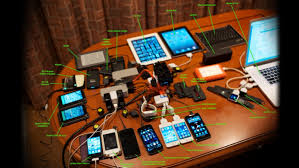 When Pew stops tracking senior adoption, does that imply a market saturated? Note this Fact Tank aggregation of technology adoption statistics (tech overall among seniors,
 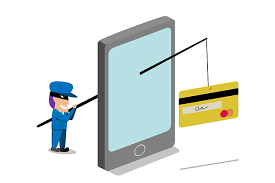 Scammers are creative – each cell phone number is a 'smishing' opportunity. It's the holidays, when scammers want to wish you the best of everything. How about a text message with a picture of the sender, someone you know, pitching a fund-raising and time-limited opportunity – in a category the recipient knows well. Except that it is fake, finding the phone number because it is widely distributed. And as an added bonus, the sender extracts the picture from now-accessible contacts (easily scraped from LinkedIn, press releases, Gmail messages, etc.). Scammers seize the opportunity and send you a very believable text message.
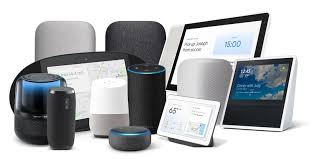 Who can and will be talking to their technology? Quite a few people will, though it is hard to get a real number – which is ironic, since Amazon, Google, Apple, Samsung, etc. all know how many they have shipped. And they also know
  What is the likelihood of living to 100 for older adults? Greater than you think – can you imagine that that by 2050, the number will grow from 72,000 to
  September always seems like a short month. Not just because of the calendar, but because of the pace of return to