The CheckWellCall service provides patients with a daily phone call to monitor quality of health
ATLANTA—CheckWellCall, an Atlanta-based health technology company, announced the commercial soft launch of its AI-powered daily wellness check-in platform for senior living operators and home-based seniors aging in place. The service automates structured, voice-based wellness conversations with patients each day, analyzes responses for deviations from baseline and alerts facility staff or family caregivers when follow-up is warranted.
BOSTON, Nov. 03, 2025 (GLOBE NEWSWIRE) -- Rendever, the company leading the industry in immersive technology for aging, has secured nearly $4.5 million in grant funding from the National Institutes of Health (NIH) to improve the aging process through technology-enabled social networks. The funding includes $3.8 million for the Thrive At Home Program and an additional grant to build a caregiver support network in VR.
Is everything now voice-enabled -- so that transition is done? Whine On. Is the response smart or, uh, just a response? Just tried an experiment, asking via Hey Siri for the best technologies to use for people with dementia. Got a nice and brief summary. Next pass, skipped the ‘Hey Siri’ part, asked the same question. This time it offered up the possibility of using ChatGPT which produced a long and useful list. So it appears Apple’s partnership with ChatGPT is working well. But why the first list at all? People asking the question don’t really want the longer list and are satisfied with the minimum? Really?
Years ago, tech for older adults became a unique category – is it still? Today most older adults want to use all consumer technology, aka AllTech. Why? Because their families and peers do so, for one, and second, (or maybe first), they do not consider themselves old. A puzzle framework evolved over the years that can encompass ‘AllTech’ but adds supportive tech for those with specific limitations like hearing loss, as well as many other enabling technologies for vision limitations, fall prevention/detection, mobility and transportation needs. The categories of technology have been supercharged as the world of cameras, voice technology, motion sensors, and most recently the addition of machine learning and other AI tools that represent the next generation of utility for older adults. Today, these capabilities are all the more useful -- as life expectancy at 65 extends well into the 80’s for both men and women. (see Market Overview Technology for Aging 2025).
LOS ANGELES, Calif. – November 21, 2024 – Independa, an award-winning platform for remote engagement, education and care, today announced the findings of its 4th Annual Health
Survey. This survey polled over 1,000 U.S. citizens aged 55 and above, providing insight into the financial challenges affecting healthcare decisions among older adults and the increasing role of telehealth services in the lives of older adults.
Sensor-based remote monitoring of older adults – a good idea in 2009. That year, GE acquired the sensor-based monitoring technology, QuietCare from Living Independently Group (LIG). Sensors could be placed around the home and alerts transmitted about the older adult – across multiple rooms, motion, and lack of motion could all be detected without a wearable. At that time, the ‘home health monitoring’ market was projected to grow to $7.7 billion by 2012. That did not happen, but fast forward to 2023 – market sizing indicates a sizable ‘remote health monitoring’ space. In the 15 years since the QuietCare acquisition, much has happened – although many players left the space when it was unclear how to make money in it.
Surveys were released recently that trigger some debate. Consider whether the low adoption of health-related tech is due to flaws with the tech or with the survey questions? AARP’s responders only had notable interest in fitness apps, though 63% of responders had chronic conditions that could usefully be monitored or mitigated by apps if the survey took a deeper dive. Do we really know from this non-specific survey whether older adults are trying them out? Up next was the Best Buy survey of consumer health tech – and again some irony in the responses. Sixty-seven percent of the 65+ responders said that staying in their homes is a top priority. Yet when asked about the utility of monitoring technology for use in later life, the 65+ segment was the least interested among age cohorts, a clear “What me, worry?” Here are the blog posts from August 2024:
Older adults today are beneficiaries of widespread tech access. And it really does fulfill the 2011 prediction in the AARP report, Connected Living for Social Aging. Broad access to online capabilities was imagined by experts when that report was written. They knew that someday high speed Internet access, widespread use of social networks, online access to food delivery, health appointments, shopping, holding video gatherings with families at holidays – all taken for granted now, but then it was just a dream. The good news is that most older adults take advantage of these and many capabilities today. Internet access today is being delivered out to remote rural areas – and most of the 65+ will soon be connected. Then what is the next quality of life frontier for older adults?
SCOTTSDALE, Ariz., April 1, 2024 /PRNewswire-PRWeb/ -- Life365, a leader in virtual care, remote patient monitoring (RPM), and patient engagement, and Canary Speech, a developer of vocal biomarker technology forging a new era of machine learning in healthcare, have partnered to scale new, proactive care technologies to large populations of patients cost-effectively, by leveraging the Microsoft Cloud for Healthcare platform. Life365 and Canary Speech hold extensive patent portfolios that include core technology involving wearables and sensors and AI / voice biomarkers.

 Is everything now voice-enabled -- so that transition is done? Whine On. Is the response smart or, uh, just a response? Just tried an experiment, asking via Hey Siri for the best technologies to use for people with dementia. Got a nice and brief summary. Next pass, skipped the ‘Hey Siri’ part, asked the same question. This time it offered up the possibility of using ChatGPT which produced a long and useful list. So it appears
  Years ago, tech for older adults became a unique category – is it still? Today most older adults want to use all consumer technology, aka AllTech. Why? Because their families and peers do so, for one, and second, (or maybe first), they do not consider themselves old. A puzzle framework evolved over the years that can encompass ‘AllTech’ but adds supportive tech for those with specific limitations like
 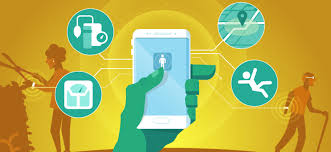 Sensor-based remote monitoring of older adults – a good idea in 2009. That year, GE
  Surveys were released recently that trigger some debate. Consider whether the low adoption of health-related tech is due to flaws with the tech or with the survey questions? AARP’s responders only had
  Older adults today are beneficiaries of widespread tech access. And it really does fulfill the 2011 prediction in the AARP report,