
Related News Articles

01/09/2026

The growing ecosystem of devices and products serving peoples’ health and well-being shows us that innovators already see the opportunity to serve the fast-growing market for self-care among people 50 years of age and up. 

01/08/2026

For nearly twenty years, one thing has felt inevitable: when boomers reach “old age,” senior living demand will surge. And yet ..

01/08/2026

ChatGPT Health builds on consumer use of today's ChatGPT so responses are informed by your health information and context. 

01/08/2026

The prize honors .lumen’s Glasses for the Blind, an AI-based device that applies autonomous driving technology adapted for pedestrians. Using computer vision and local processing, the headset understands the three-dimensional environment in real time without relying on the internet or pre-defined maps and guides the user through subtle vibrations indicating a safe direction to follow.

01/03/2026

The United States faces a fundamental mismatch between surging demand and insufficient capacity.

You are here

September 2025

AI functionality is there today in healthcare, home care, and long-term care

The AI infrastructure juggernaut is on – consumers hesitate and deployment is cautious.   Parallel tracks are emerging. Investment by the big players in infrastructure (see Nvidia) is overwrought.  Even Oracle is jumping in with billions – as well as redirecting the company to be all-in on AI.  Today, 78% of companies say they are using AI in at least one business function. Meanwhile, back over in the real people corner, surveyed consumers continue to be surveyed and are cautious and concerned. Why the disconnect?  Mostly gloomy news coverage about AI.
Tech-savvy baby boomers will turn 80 soon – what’s it mean?

Baby boomer aging – it’s a big tech opportunity. Today there are 76 million US baby boomers, those born between 1946 and 1964.  They represent 21 percent of the US population.   73% of all wealth in the United States is concentrated among those over age 55, most of whom are baby boomers.   As the oldest of the baby boomers begin turning 80 in January of 2026, which can generate worry (as in that NY Times post) or be viewed as a market opportunity.   Life expectancy at 65 is on average another 20 years.   Note that 20% of the 65+ today are working.   So what does it all mean?
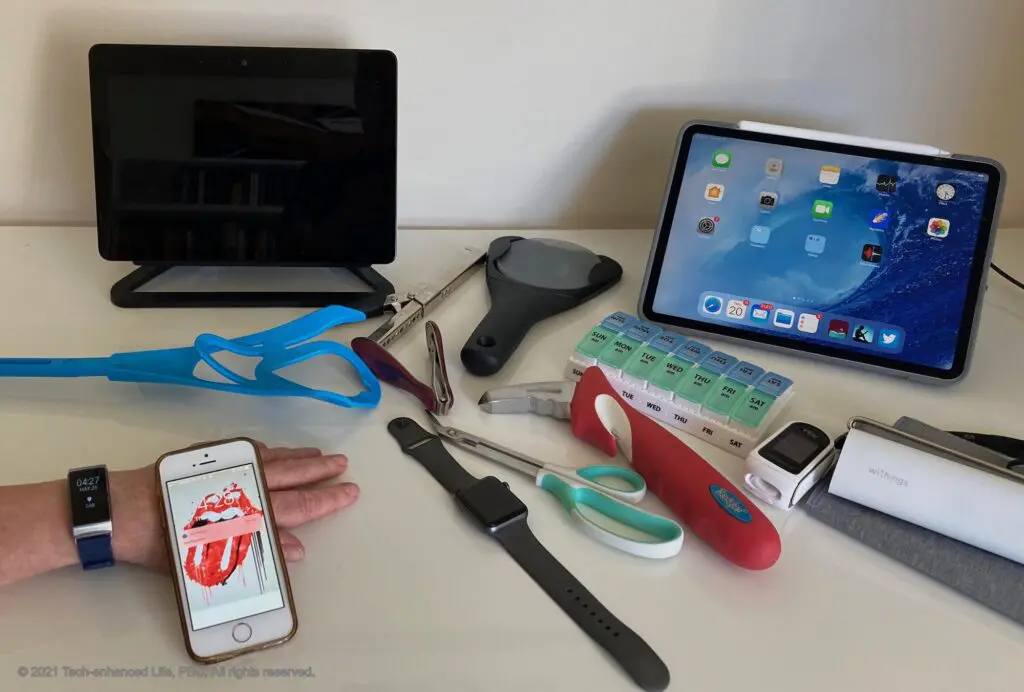
For older adults, the tower of tech babble grows – but so does benefit

It’s a pretty good tech universe if you know what you’re doing...  Maybe you’re someone who reads all the new tech announcements, knows that your phone is aging, understands what features you need and goes forth and buys the new gadget of the day.  However, survey after survey show that while adoption is growing, more than half (59%) of older adults think technology is not designed with their age in mind. two-thirds (64 percent) of older adults believe they have the digital skills necessary to fully take advantage of being online.

Optimism needed -- an aging population strains support organizations

Consider this gloomy WSJ article about aging. More Americans Are Aging Alone, Who Will Take Care of Them? The premise? “More than 16 million people aged 65 and older in the U.S. live alone. That represents 28% of that age group, almost triple the share in 1950." Whoa!  First of all 20% of the 65+ population is working today. Why? Life expectancy at 65 has risen to the mid-eighties for both women and men, compared to late 60’s, early 70’s in 1950. And a shrinking percentage of Americans live in rural areas today, according to Pew Research. While the article is a compelling description of a heroic organization of underpaid workers serving an Appalachian community, mapping the article to the reality of older adults in the United States today is disingenuous.

Categories