
Related News Articles

01/09/2026

The growing ecosystem of devices and products serving peoples’ health and well-being shows us that innovators already see the opportunity to serve the fast-growing market for self-care among people 50 years of age and up. 

01/08/2026

For nearly twenty years, one thing has felt inevitable: when boomers reach “old age,” senior living demand will surge. And yet ..

01/08/2026

ChatGPT Health builds on consumer use of today's ChatGPT so responses are informed by your health information and context. 

01/08/2026

The prize honors .lumen’s Glasses for the Blind, an AI-based device that applies autonomous driving technology adapted for pedestrians. Using computer vision and local processing, the headset understands the three-dimensional environment in real time without relying on the internet or pre-defined maps and guides the user through subtle vibrations indicating a safe direction to follow.

01/03/2026

The United States faces a fundamental mismatch between surging demand and insufficient capacity.

You are here

October 2020

Tech-enabled Home Care Redux? Do investors remember 2016?

What’s up with investing in home care and technology?  Some recent announcements offer almost the same frothy level of investment that characterized the 2016 investor spending spree, neatly noted in a 2016 Forbes article. The Forbes list included the $157 million poured into Care.com, unfortunately revealing a shocking lack of company oversight of care workers in 2019.  Home Care Assistance received $100 million in 2016. In fact, 2013-2017 saw the rise, rise, and then fall of Home Hero – which raised $18 million (closing in 2017) and Hometeam’s $40 million in 2016. 
Future of Remote Care Technology and Older Adults 2020 -- Themes Emerge

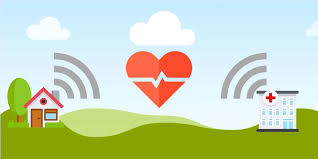
What is the status and future of remote care technologies? As the research interviews for the 2020 report “Future of Remote Care Technology and Older Adults” wind down, a few themes become apparent. This work began in the summer of 2020 as the Covid-19 lockdown was underway. The pandemic has likely transformed the senior-focused ecosystem. It triggered ingenuity of senior care organizations and vendors; and it energized innovators and prospective investors. Reimbursement of technology was a key policy change in 2020 that fueled adoption and investment in telehealth. That change super-charged growth in telehealth-related companies that had been growing incrementally. And as senior living executives agreed early, from a technology investment standpoint there’s no turning back.
Social isolation of older adults – a problem and an opportunity

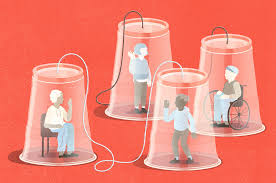
Life has been worsening for older adults – in senior living and at home.  Every day there is some new article about the impact of Covid-19 on older adults -- or another study turns up that you missed. Residents in senior living communities are having a tough time, cut off from activities and visits from family.  Isolation has produced an increase in mental health issues, loneliness and depression – and that would be for those who have a good grasp of what is going on – for those in long-term care, for those with dementia, unable to be hugged by family, it is far worse. What’s been going on with older adults in the context of social isolation and loneliness?

Five Recent Voice-Enabled Innovations for Older Adults 2020

Voice-enabled innovation softly races ahead. Technology innovation announcements whiz by at what seems to be a breakneck pace. Consider Amazon’s Whisper Mode – “I think you just whispered to me – Sau ‘turn on’ Whisper Mode.” Not just for insomniacs, imagine its utility for the faint-voiced older adult wanting to ask a question.  Or consider Apple Family Setup, which enables an Apple Watch to be set up and used without an iPhone, enabling texts, calls and GPS location.  Or in-Car voice technology like Garmin Speak-Plus for directions without a screen (that’s a plus).   Here are five from recent times:

Categories