CES is overwhelming – and it would be impossible to see all of these in person. But looking through the best-of lists and the award winners in various categories (including the Accessibility Stage this year), these offerings caught my eye for the benefits they can offer older adults, including those with grandchildren. Most are very new, and as always with CES, a number are not quite available. A link to the website is the best way to learn more – all information came from the firms’ sites.
The prize honors .lumen’s Glasses for the Blind, an AI-based device that applies autonomous driving technology adapted for pedestrians. Using computer vision and local processing, the headset understands the three-dimensional environment in real time without relying on the internet or pre-defined maps and guides the user through subtle vibrations indicating a safe direction to follow.
CES 2025 is wrapping up soon -- here's another look. As always, it is an opportunity to contemplate the state of tech innovation, wading figuratively past announcements of cars and TVs. Browsing through the many articles and news websites, looking for what could benefit older adults in the context of making lives easier, more sociable, more functional and empowered, these five are attention-worthy. All material is from their announcements and/or websites. As with previous CES 2025 blog posts, it is important to note that offerings may be concepts, not yet products, and that some may not enter the commercial or US market at all. The important aspect is that the underlying technologies are a step (or more) forward in possibilities to help older adults. Here's hoping that next year has even more to consider.
One might think that the Consumer Electronics Show is about consumer electronics. Not really. It is about tech concepts and possibilities, and possibly new or near-term products, that can lead to future products and/or distribution in the market. Whether in TVs, cars, drones, wearables, accessibility tech, home appliances or headsets, this international show with its 150,000 attendees has an ‘AI Everywhere’ (surprise!) theme. Attendees help both startups and established players to gain media and market attention and maybe even meet a few distribution partners or funders. Here are 10 from this year’s show:
Technology has enhanced the world for those with vision limitations. As many as 50 million Americans have some degree of vision loss -- a problem that was poorly addressed by technology prior to the arrival of smartphone navigation, smart glasses, sensors, robotics and AI in nearly all devices and technologies. Today, it's a whole new and innovative world -- supportive of individuals with a range of vision limitations from low vision to completely blind. And in fact, today those who are blind can use haptics to follow a game in real time, even in a stadium. They can create presentations from data sets, read road signs down the road, navigate airports and safely make their way through obstacle-filled streets. Here are five technology enablers that will likely make a difference:
Refresh required. Each year, the Technology for Aging Market Overview is revised in January of the new year. This year, that revision is being published right after CES 2024, which featured multiple offerings of possible utility to older adults, especially those with physical limitations. The purpose of the document, however, is to aggregate and review trends from 2023 that shape 2024, technology changes that matter, and offer, by category, a sampling of products, services, and sites of relevance to the older adult market. As such, the report is intended for those businesses (for-profit, non-profit) and services that want and need to serve the older adult segment.
The press releases signal a busy time in Las Vegas. Viewed from afar, drowning in press releases, it is clearly a nearly fully revived CES 2024. With 130,000 attendees it’s down a bit from 2020’s peak of 175,000. From electric motorcycles and low-profile automobile antennas, the unfolding TV to robotic pool cleaners and lawn mowers and construction, it sounds like it was a noisy place. Some folks think this is a consumer show, but that was the long-ago Consumer Electronics Show. So many entrants in the AgeTech, accessibility and health categories seek visibility and possible global reach.
What is the AARP AgeTech Collaborative? AARP’s AgeTech Collaborative launched in 2021 with a splash (and 50 startups) that has widened into an age wave, or a sort of Match.com for age-related companies to find others, including collaborators, sponsors, pilots, and more. Today’s collection includes 104 companies, many of whom have gone through the AgeTech Collaborative Accelerator process, including pitch competition, Accelerator program enabling entry into the AgeTech Collaborative program. The categories span Caregiving, FemTech, Health, Mobility, Savings & Planning, and Social Connections.
BOSTON, Jan. 23, 2023 /PRNewswire/ -- Mirroring the broader social trend of increasing awareness around inclusivity, exhibitors at CES 2023 highlighted the capabilities of consumer electronics to deliver assistive technology. IDTechEx attended the event, held January 5 – 8 in Las Vegas, and report on this key trend across interviews with exhibitors over the four days.

 CES is overwhelming – and it would be impossible to see all of these in person. But looking through the best-of lists and the award winners in various categories (including the
  CES 2025 is wrapping up soon -- here's another look. As always, it is an opportunity to contemplate the state of tech innovation, wading figuratively past announcements of cars and TVs. Browsing through the many articles and news websites, looking for what could benefit older adults in the context of making lives easier, more sociable, more functional and empowered, these five are attention-worthy. All material is from their announcements and/or websites. As with previous CES 2025 blog posts, it is important to note that offerings may be concepts, not yet products, and that some may not enter the commercial or US market at all. The important aspect is that the underlying technologies are a step (or more) forward in possibilities to help older adults. Here's hoping that next year has even more to consider.
 One might think that the Consumer Electronics Show is about consumer electronics. Not really. It is about tech concepts and possibilities, and possibly new or near-term products, that can lead to future products and/or distribution in the market. Whether in TVs, cars, drones, wearables, accessibility tech, home appliances or headsets, this international show with its 150,000 attendees has an ‘
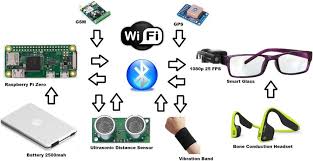 Technology has enhanced the world for those with vision limitations. As many as 50 million Americans have some degree of vision loss -- a problem that was poorly addressed by technology prior to the arrival of smartphone navigation, smart glasses, sensors, robotics and AI in nearly all devices and technologies. Today, it's a whole new and innovative world -- supportive of individuals with a range of vision limitations from low vision to completely blind. And in fact, today those who are blind can use haptics to follow a game in real time, even in a stadium. They can create presentations from data sets, read road signs down the road, navigate airports and safely make their way through obstacle-filled streets. Here are five technology enablers that will likely make a difference:
 The press releases signal a busy time in Las Vegas. Viewed from afar, drowning in press releases, it is clearly a nearly fully revived
  What is the AARP AgeTech Collaborative? AARP’s AgeTech Collaborative launched in 2021 with a splash (and 50 startups) that has widened into an age wave, or a sort of Match.com for age-related companies to find others, including collaborators, sponsors, pilots, and more. Today’s collection includes 104 companies, many of whom have gone through the AgeTech Collaborative Accelerator process, including pitch competition, Accelerator program enabling entry into the