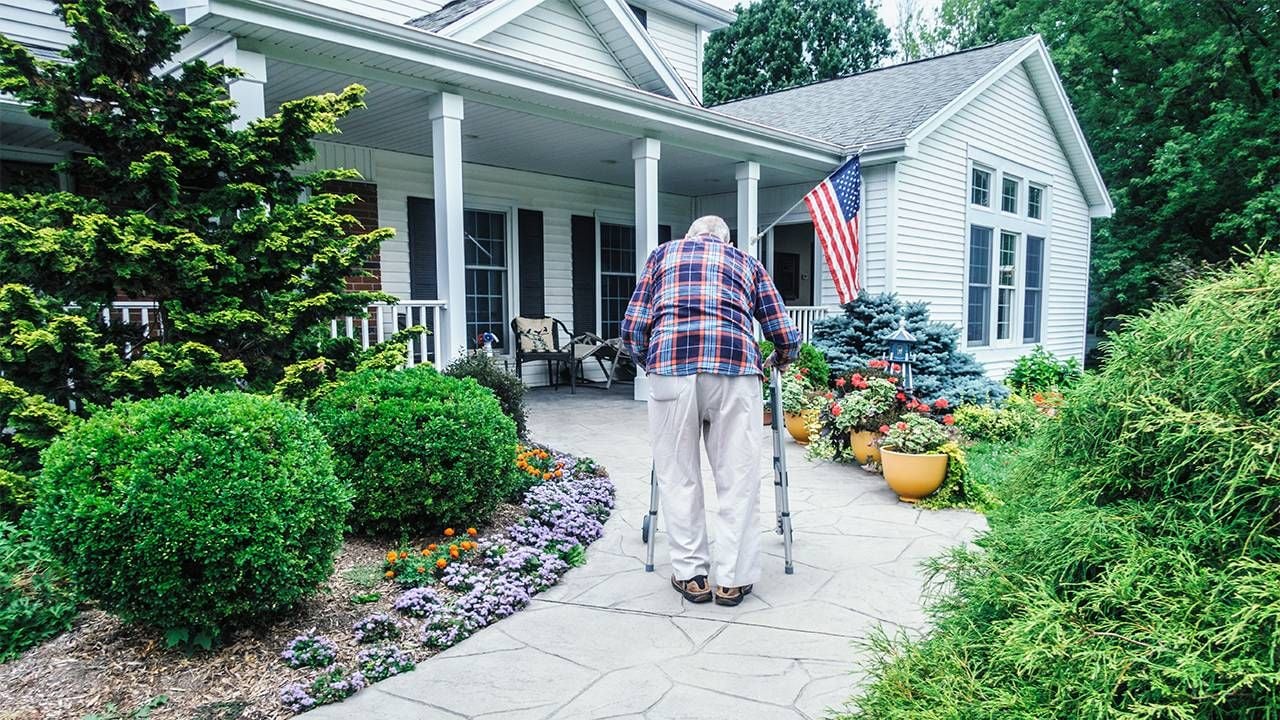
Aging in place makes the senior living industry anxious. A new article from Caring.com scopes out the cost differential between aging in place (in some states), replete with home modification requirements and related costs. It identifies the 10 states where assisted living is actually cheaper than aging at home, with South Dakota as being the most reasonable by comparison to staying at home. Hmmm. Average temperature in South Dakota in February is, let’s say, too cold to go for a walk. But no worries, the median age in South Dakota is 38.5 and only 5% are aged 80+. So it may be cheaper to age in place there, but virtually no one is doing it.
Consider this gloomy WSJ article about aging. More Americans Are Aging Alone, Who Will Take Care of Them? The premise? “More than 16 million people aged 65 and older in the U.S. live alone. That represents 28% of that age group, almost triple the share in 1950." Whoa! First of all 20% of the 65+ population is working today. Why? Life expectancy at 65 has risen to the mid-eighties for both women and men, compared to late 60’s, early 70’s in 1950. And a shrinking percentage of Americans live in rural areas today, according to Pew Research. While the article is a compelling description of a heroic organization of underpaid workers serving an Appalachian community, mapping the article to the reality of older adults in the United States today is disingenuous.
The more things change…Argentum published a new survey of senior living executives last month, querying execs about tech adoption, including thoughts about AI in senior living. The report (also sponsored by A Place for Mom) compared two sets of responses about tech from 2023 and 2024 – enabling a possible comparison. On the upbeat side, as of 2024, 76% of responders are optimistic about the role AI can play in their organizations. That question was probably not asked in 2023, so there was nothing to compare, but a number of them today are apparently experimenting with AI. They say that the uses are for staffing efficiency, care planning and improved resident interaction. Perhaps a number of them read a most 2024 report from this website, The Future of AI in Senior Living and Care and saw possibilities for improved documentation, staff education, and even the potential for predictive analytics.
IEEE wants to drive creation of a standard for AgeTech. The global organization, long a player in the creation of standards across the spectrum of technology and engineering, has launched an ‘Activity’ called Technology Standards for the Aging (or AgeTech).The scope includes “terminology, human factors, usability, metrics, test methods, and interoperability for AgeTech products and services.” One possible output of this initiative is a certification of products or services that are in compliance with the standard. Many already associated with the AgeTech topic are participating in this initiative, which is comprised of meetings and online discussion over a two-year period.
Is aging in place a smart strategy? Here we go again. In a brand new and similarly rosy article in the Wall Street Journal, more of the same mediocre advice is offered about how to prepare. Have a frank talk with family members. Maybe do some home modifications (those rickety stairs? Or a $20,000+ elevator), or address that lengthy distance from a supermarket? Maybe the 3-4% of older adults with long-term care insurance will pay for home care that averages $24,000/month for round-the-clock care. Hmmm. Or voice-activated devices, says an AARP exec, will be helpful for his long-distance aging parents. Says a family, we want Mom to stay in her house, and so we pay $4000 per month for care, because staying in her house is keeping her alive. Really.

 Aging in place makes the senior living industry anxious. A new article from
  IEEE wants to drive creation of a standard for AgeTech. The
  Is aging in place a smart strategy? Here we go again. In a brand new and similarly rosy