We like to complain about the obvious. For a long time (I am embarrassed to say how long), I complained that my devices ran out of charge before the day was done. Every day I railed about the incompetence of the company that would create such a thing – a smartphone that couldn’t last the full day. Finally, idly, I glanced at a blog that advised on how to extend the device’s daily charging life by shutting down apps and features we don’t use. Duh. You might then notice that there are at least a gazillion sites that offer advice on preserving daily battery life. And the advice is not all the same!
Fifteen years is a long time in the tech world. In 2011, 30 executives across the tech industry were queried about how technology needed to change to accommodate older adults. Opinions in this AARP-sponsored report were obtained from Intel to HP to Google to Cisco to Microsoft to Philips, from Stanford to Georgia Tech to UCLA as well as multiple futurists and startups. The report is not on the AARP website any more, understandably because it is too old – but can be found here: Connected Living for Social Aging: Designing Technology for All.
It’s a pretty good tech universe if you know what you’re doing... Maybe you’re someone who reads all the new tech announcements, knows that your phone is aging, understands what features you need and goes forth and buys the new gadget of the day. However, survey after survey show that while adoption is growing, more than half (59%) of older adults think technology is not designed with their age in mind. two-thirds (64 percent) of older adults believe they have the digital skills necessary to fully take advantage of being online.
PHILADELPHIA (Sept. 2025) — Generations on Line, a national nonprofit that teaches older adults to use the internet, is marking its 25th anniversary on National Grandparents Day, observed this year on Sunday, September 7. Launched September 7, 2000, with then-Philadelphia Mayor John Street and U.S. Commerce Secretary Norman Mineta, Generations on Line has provided free internet training tutorials to over 300,000 older adults nationwide and, through its apps, in other English-speaking countries.
Census data shows what models, samples and estimates cannot. Actual responses surveying access to technology can highlight regional gaps in broadband access – despite all the talk about broadband availability ‘everywhere’ and multiple federal programs over the years trying to make it so. The Federal Communications Commission (FCC) explains why broadband access is important, even critical: senior learning programs, telehealth access, streaming video, and shopping. Let’s add social communication for communities and family, such as Zoom and FaceTime.
SAN JOSE, CA—March 19, 2025—Calix, Inc. (NYSE: CALX) announced that Beacon Broadbandopens in a new tab, a subsidiary of Coos-Curry Electric Cooperative, has launched a six-week digital literacy class in Oregon to help senior citizens learn to navigate the internet securely, enhancing their lives. The class pairs seniors with high-school student volunteers as instructors, covering topics like telehealth, digital banking services, and cybersecurity.
It’s that awful time – the hurricane season. The time when the national hurricane center forecasts, repeated ad nauseum, are destined to frighten everyone, no matter how far from affected regions. The same broadcast can dwell on cones and paths, shout at those in beach areas that the evacuation instructions are meant for them – “IF YOU STAY, YOU WILL DIE!” Mapping the cone of the hurricane and talking constantly about evacuation sounds like a plan – but some observe that the distance required to evacuate to safety could be long – and thus talking about availability of shelters makes more sense. So residents who will 'shelter in place' stock up before stores begin closing, and gas stations run out of gas . Then they watch the 24-hour source of all fear – cable news, looking for guidance from Jim Cantore, that icon among storm trackers.
Don’t we already have technology to live our best life as we age? Absolutely, aspredicted in 2011, needs have been fulfilled, tech innovation has made it so. But do older adults know about it? Could they afford it? Could they deploy it in their homes? Will it enable them to age in place? Do investors view the ‘best life’ suite of capabilities as an opportunity worthy of funding? The process of pitching one product at a time is well established – and innovators are comfortable with it, as are their judges. But is that what older adults need? Or would a suite of offerings, with deployment before the need becomes urgent, make more sense? Here are the four blog posts from June, 2024:
An old report, the core concept of Connected Living was excellent and predictive. Thirteen years ago, AARP sponsored research that posed questions about technology’s future role in connecting older adults with families, resources and each other. With input from 30 industry experts, the research attempted to determine how technology could better serve older adults moving forward. The result was a 2011 report called Connected Living for Social Aging: Designing Technology for All. You won’t find it on AARP’s website – it’s too old. But it is very interesting, especially given that year's low technology adoption and extremely limited use among older adults compared to today. The report accurately predicted the major role technology would take in their lives as they aged, though experts were not exactly sure how.
Baby boomers and beyond increasingly depend on technology -- but using it has become a chore of fragmentation across devices and websites.
As the pace of inevitable tech change collides with an aging demographic, firms will need to seek user input, especially in healthcare. Accessibility features will become standard technology features.”

 to complain about the obvious. For a long time (I am embarrassed to say how long), I complained that my devices ran out of charge before the day was done. Every day I railed about the incompetence of the company that would create such a thing – a smartphone that couldn’t last the full day. Finally, idly, I glanced at a
 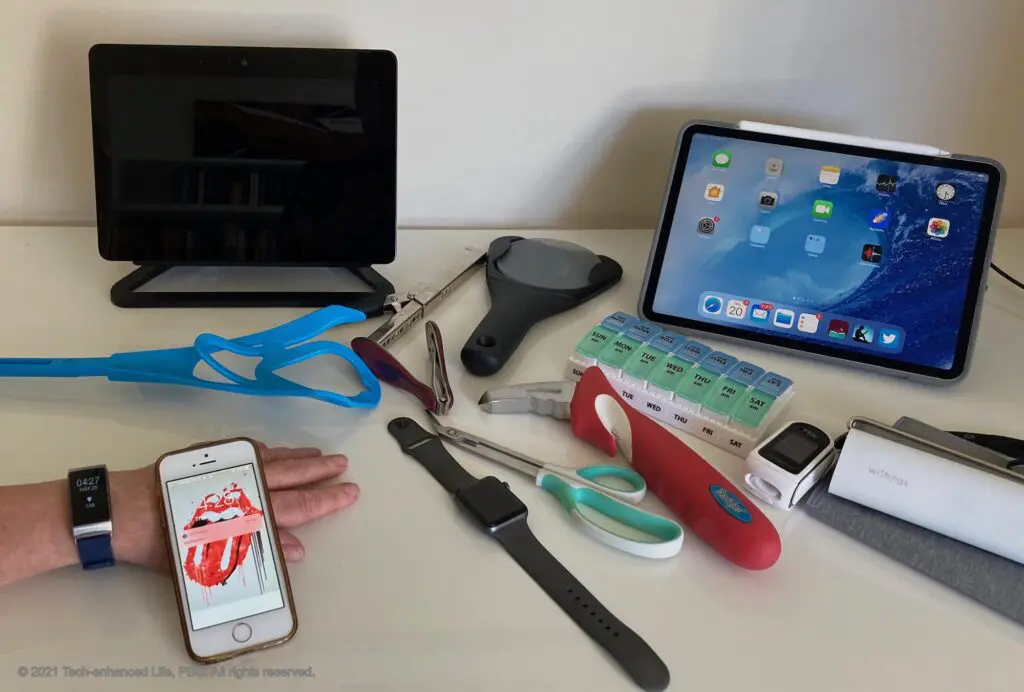 ears is a long time in the tech world. In 2011, 30 executives across the tech industry were queried about how technology needed to change to accommodate older adults. Opinions in this AARP-sponsored report were obtained from Intel to HP to Google to Cisco to Microsoft to Philips, from Stanford to Georgia Tech to UCLA as well as multiple futurists and startups. The report is not on the AARP website any more, understandably because it is too old – but can be found here:
 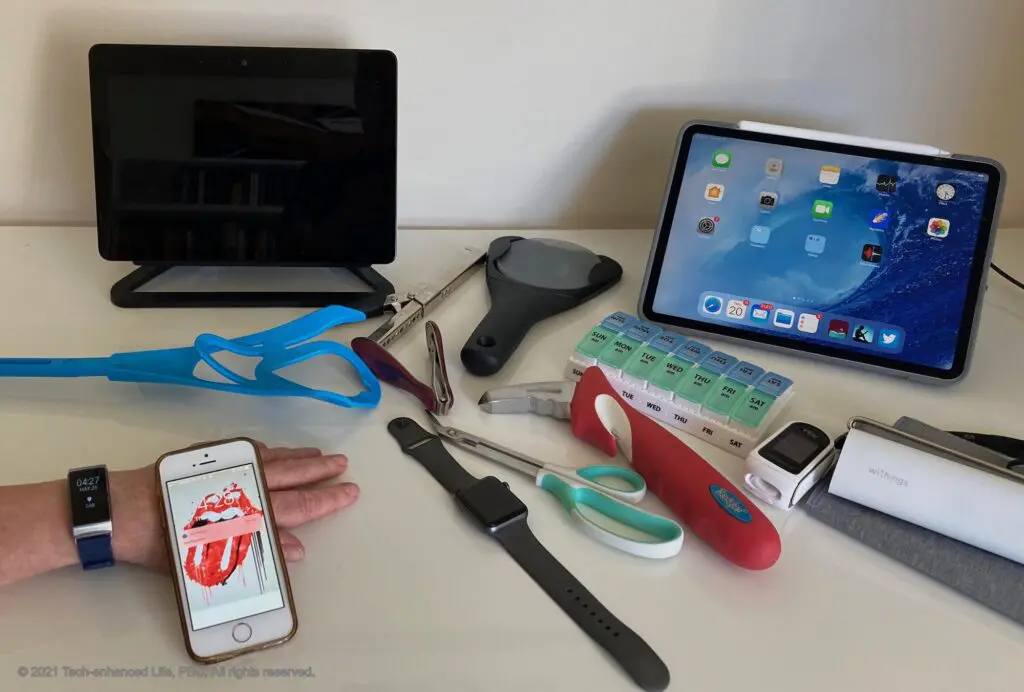 It’s a pretty good tech universe if you know what you’re doing... Maybe you’re someone who reads all the
  Census data shows what models, samples and estimates cannot. Actual responses surveying access to technology can highlight regional gaps in broadband access – despite all the talk about broadband availability ‘everywhere’ and multiple federal programs over the years trying to make it so. The
  It’s that awful time – the hurricane season. The time when the national hurricane center forecasts, repeated ad nauseum, are
  Don’t we already have technology to live our best life as we age?
  An old report, the core concept of Connected Living was excellent and predictive. Thirteen years ago, AARP sponsored research that posed questions about technology’s future role in connecting older adults with families, resources and each other. With input from 30 industry experts, the research attempted to determine how technology could better serve older adults moving forward. The result was a 2011 report called