Fifteen years is a long time in the tech world. In 2011, 30 executives across the tech industry were queried about how technology needed to change to accommodate older adults. Opinions in this AARP-sponsored report were obtained from Intel to HP to Google to Cisco to Microsoft to Philips, from Stanford to Georgia Tech to UCLA as well as multiple futurists and startups. The report is not on the AARP website any more, understandably because it is too old – but can be found here: Connected Living for Social Aging: Designing Technology for All.
The growing ecosystem of devices and products serving peoples’ health and well-being shows us that innovators already see the opportunity to serve the fast-growing market for self-care among people 50 years of age and up.
WASHINGTON, DC — The AgeTech Collaborative™ from AARP returned to CES 2026 to demonstrate how artificial intelligence (AI) and emerging technologies are transforming the future of aging. At CES 2026, AARP imagines a future where aging is about living boldly, supported by technology that empowers independence, creativity, and connection at every stage of life.
As they do each year since 2016, AARP surveys the 50+ about tech. AARP’s new Tech Trends and the 50+ offers a sharp reminder about what’s changed in tech ownership over the past decade. We have moved from desktop computers and simple cell phones, email and browsing to today's plethora of tech choice. The report reflects what we can see all around us – 90% of the 50+ have smartphones, texting is their lead communication method, and 90% use social media. Unfortunately, the report continues to frame the older adult as age 50+. With a life expectancy at 65 extending into the 80s and beyond, this 35+ year span called ‘older adult’ might as well be replaced with ‘everybody.’ Maybe next year, the report will begin to examine the preferences of the 80+ in detail, as this Link-age Connect 2025 survey does. Why doe it matter? In January, 2026, the baby boomers start to turn 80 -- 10,000 per day for the next 20 years.
AI technology is permeating every aspect of business technology today. Increasingly it will be deployed in the care of older adults, as apparent in research reports like The Future of AI in Home Care and an earlier report, The Future of AI and Older Adults (which will be revisited with new research later in 2025). With little effort, AI-enabled offerings can be found throughout the startup directory of the AgeTech Collaborative from AARP. So here are five that sound promising from their descriptions -- all info is derived from the startup website or other reference site.
Strength-related tech for stronger women? With all of the digital health startups and corresponding $10 billion in investment, I was curious as to why none are helping women gain strength, which is known to be a direct link to maintaining balance and improving bone health, not to mention helping to prevent falls. I remember a book published years ago called Strong Women Stay Young, specifically focused on older women. The author, Miriam Nelson, noted the importance of strength training and bone health – and in particular, avoiding osteoporosis, suffered by one in five women aged 50+. It turns out, none of the 2024 digital health investments that are focused on women ($1.1 billion) tackled this dimension of women’s health.

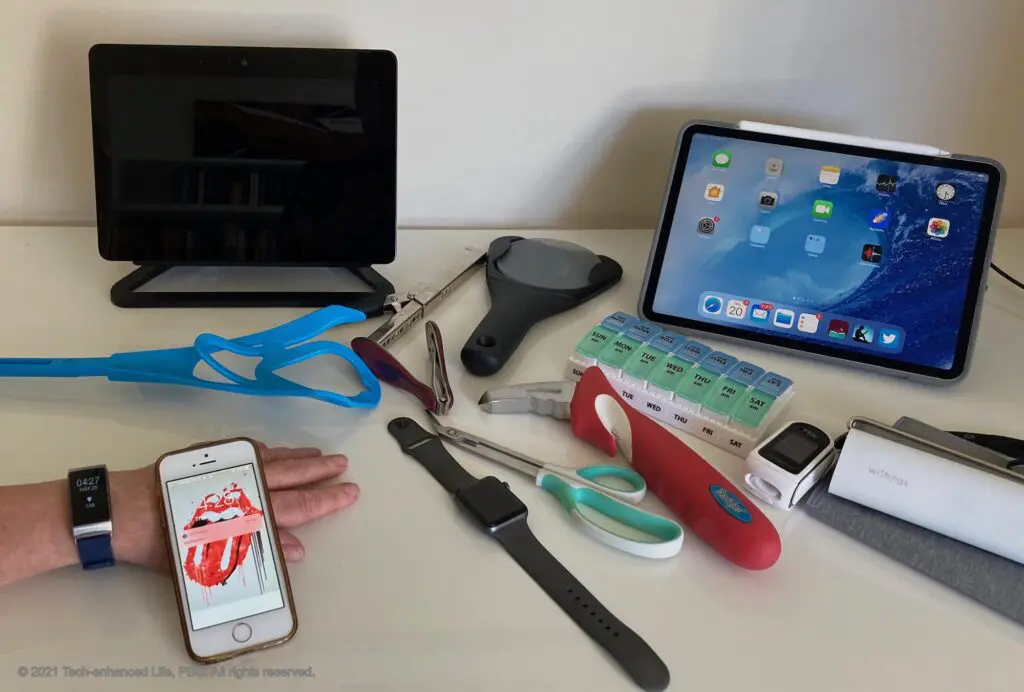 ears is a long time in the tech world. In 2011, 30 executives across the tech industry were queried about how technology needed to change to accommodate older adults. Opinions in this AARP-sponsored report were obtained from Intel to HP to Google to Cisco to Microsoft to Philips, from Stanford to Georgia Tech to UCLA as well as multiple futurists and startups. The report is not on the AARP website any more, understandably because it is too old – but can be found here:
  As they do each year since 2016, AARP surveys the 50+ about tech. AARP’s new
  Baby boomer aging – it’s a big tech opportunity. Today there are
  AI technology is permeating every aspect of business technology today. Increasingly it will be deployed in the care of older adults, as apparent in research reports like
  Strength-related tech for stronger women? With all of the digital health startups and corresponding