Age-Tech is in. Perhaps you have seen the Age-Tech term pop up since early 2020, led in the US by by AARP’s CEO Jo Ann Jenkins. Now it is all around – it characterizes AARP’s recently convened AgeTech Collaborative to ‘accelerate and scale new solutions for the 50+ market.’ AgeTech has its own Market Map as developed by Keren Etkin, Gerontechnologist. And more recently, a young San Francisco investor, Scott Rupp, offered up the Age-Tech economic outlook from Dominic Endicott of 4Gen investment in the UK, an ‘Age-Tech expert,’ describing what the Age-Tech market is today.
WASHINGTON, Nov. 15, 2021 /PRNewswire/ -- Today AARP launched the AgeTech Collaborative™ from AARP, a new platform to help AgeTech innovators generate big new ideas and send thriving products into what's now an $8.3 trillion economy driven by those who are age 50 and older. Innovation will be the key to helping people take advantage of longer and healthier lives in the coming years, the 38-million-member association says.
Shining a harsh light on Facebook – the company. Founded by a near-teenager in 2004, the company is a social networking monopoly, with 91% of revenue in that market that includes messaging (What’s App, Facebook Messenger). It also owns Instagram (one-quarter of its 2019 revenue). With 1.84 billion daily users, it is top of mind for marketers – and some 200 million small businesses reach their customers nearly exclusively through its platform. It is a regular news source, though ironically not trusted for political news. The news about Facebook is more compelling than the news from Facebook – including this week’s Wall Street Journal reports of Facebook applying different rules to a select subset (5.8 million) of its users, including allowing them posts that include harassment, inciting to violence or other bad behavior. Who uses Facebook? Well, most people, according to Pew: Facebook is used by 77% of US women, versus 61% of US men, with women aged 25-34 representing the biggest user group. Older adult usage of Facebook has dropped from 62% of the 65+ in 2016 to 50% in 2021. But that could be the result of family migration to Instagram for photo sharing.
Consider AARP’s list of flip and smart phones. AARP just published a puzzling guide article about smartphones targeted to older adults. Note the article and the commentary that accompanied it – (and don’t get distracted by the paragraph explaining megapixels). You may be struck by multiple aspects of this article – in addition to the phone makers you haven’t heard of. The IDC VP refers to older adults as senior citizens, for one, the T-Mobile exec lumping older adults into 55+ segment in a sweeping generalization of being ‘value conscious.’ Okay, enough being snippy.
First the ‘good news’ about tech adoption… According to AARP’s newest technology adoption report, just published, older adults are positive about the role technology can play in their lives during and after Covid-19. They are chatting via video, using social media livestreams and modernizing their technology. They are buying smart TVs, costly smartphones, and earbuds. The survey reports that 20% of the 70+ age range owns a wearable, possibly a smartwatch. Also notable, considering that most wearables are still paired with them, smartphone ownership, according to this survey, has risen most sharply among those aged 70+, with 77% of responders indicating they own one. This is a number worth questioning, however, since Pew Research's most recent mobile fact sheet indicates that only 61% of the 65+ have smartphones.
Wearable devices make up an $81.5 billion global market in 2021. According to Gartner’s January 2021 forecast, this was driven by increased consumer interest in tracking their health status during the pandemic (smart watches) and the growth of remote work (purchases and upgrades to headphones and ear-warn devices). According to one insider, 3-5 million Apple watches alone have been purchased by adults age 65+. And AARP’s newest technology adoption report, just published, notes that 20% of the 70+ age range own a wearable. Also notable, considering that most wearables are still paired with them, smartphone ownership has risen most sharply among the 70+, with 77% of survey responders indicating they own one.
Pew Research just published its periodic survey about Internet use. Let’s assume consensus that growing the percentage of those using the Internet was a social good. Let’s assume that many are now concerned that older adults may have missed vaccine sign-up opportunities without access to the Internet. Pew’s survey categories included: Age, Rural/Urban, Male-Female, Income, Race, and Education. The result is pretty much ho-hum – if you look only at the headline – 7% of Americans Don’t use the Internet. Let’s say that 77% of the American population are adults (using Census data). Translating the Pew number to non-users of the Internet results in nearly 23 million people. Not a trivial number. Too bad there were no correlations between Age, Education, Income with Internet use. But we can guess what we could find.

 Age-Tech is in. Perhaps you have seen the Age-Tech term pop up since early 2020, led in the US by by
  Shining a harsh light on Facebook – the company. Founded by a near-teenager in 2004, the company is a
  Consider AARP’s list of flip and smart phones. AARP just published a puzzling
  First the ‘good news’ about tech adoption…
 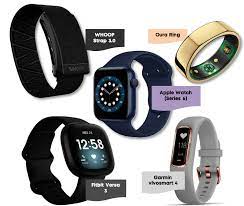 devices make up an $81.5 billion global market in 2021. According to Gartner’s
  Pew Research just published its periodic survey about Internet use. Let’s assume consensus that growing the percentage of those using the Internet was a social good. Let’s assume that many are now concerned that older adults may have missed vaccine sign-up opportunities without access to the Internet. Pew’s survey