Senior living and nursing home executives weigh in on the role that AI may currently offer and will likely play in the future. They see the potential to optimize their workforce and obtain better insights about their residents' needs. Within a few years, AI will no longer be described as a separate category -- but its features of machine learning, customized vocabulary and conversational responses will be expected and provided.
No surprise – AI tools are already part of senior living operations and planning. The research phase is nearly complete for the report on AI in Senior Living and Care. It is increasingly apparent that AI is not a future for many. it is already solving vexing problems that proprietary or existing apps could not effectively tackle, whether in senior living or skilled nursing home environments. Although a few interviewees felt that AI tools were 'not quite ready for prime time' all saw that the future benefit, particularly in terms of more effective use of data, optimizing workloads of staff, and proactive monitoring of the wellbeing of residents. The report will quote specific executives about their experiences, but here are insights from the 20 conversations held to date:
Is aging in place a smart strategy? Here we go again. In a brand new and similarly rosy article in the Wall Street Journal, more of the same mediocre advice is offered about how to prepare. Have a frank talk with family members. Maybe do some home modifications (those rickety stairs? Or a $20,000+ elevator), or address that lengthy distance from a supermarket? Maybe the 3-4% of older adults with long-term care insurance will pay for home care that averages $24,000/month for round-the-clock care. Hmmm. Or voice-activated devices, says an AARP exec, will be helpful for his long-distance aging parents. Says a family, we want Mom to stay in her house, and so we pay $4000 per month for care, because staying in her house is keeping her alive. Really.
Exceeding expectations in every way. The next report was going to be titled – “The Future of AI in Senior Living” but that was so yesterday. One 2023 document, The Future of Artificial Intelligence in Senior Living offered up the categories where it would/could be useful – including in remote home monitoring, and its ‘emerging’ categories of AI solutions for seniors and senior living communities. The report referred to a 2023 study about how an AI algorithm could predict patients at highest risk for readmission to the hospital – using multiple data sources as inputs. No surprise – the algorithm’s recommendations were used, and the predictions and care recommendations enabled a 21% reduction of rehospitalization.
DENVER, July 17, 2024 – LifeLoop, the leading resident and staff experience solution for senior living, today announced its acquisition of Linked Senior, an e
The population is aging – and still, the tech solution market is immature. Investors of all types demonstrate interest in a product here and an offering there. Competitions highlight product winners; money is raised for one product at a time. One reason for the immaturity of the market is the behavior of buyers. Senior living companies buy a product for this and an offering for that. The future is predicted to incorporate new technology like AI – but that is always ‘in the future.’ Everyone agrees that AI could enhance retirement living and healthcare, but deployment of new offerings is always described as in the future. No other software categories in tech history – consider office, finance, supply chain – remain a laundry list of point products when markets expect suites.
AI has innovative solutions that enhance health management, safety, social engagement, cognitive support, and personalized care for seniors in retirement.

 No surprise – AI tools are already part of senior living operations and planning. The research phase is nearly complete for the report on
  Is aging in place a smart strategy? Here we go again. In a brand new and similarly rosy
 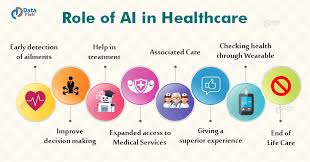 Exceeding expectations in every way. The next report was going to be titled – “The Future of AI in Senior Living” but that was so yesterday. One 2023 document,
  The population is aging – and still, the tech solution market is immature. Investors of all types demonstrate interest in a product here and an offering there. Competitions highlight product winners; money is raised for one product at a time. One reason for the immaturity of the market is the behavior of buyers. Senior living companies buy a product for this and