Related News Articles

01/09/2026

The growing ecosystem of devices and products serving peoples’ health and well-being shows us that innovators already see the opportunity to serve the fast-growing market for self-care among people 50 years of age and up. 

01/08/2026

For nearly twenty years, one thing has felt inevitable: when boomers reach “old age,” senior living demand will surge. And yet ..

01/08/2026

ChatGPT Health builds on consumer use of today's ChatGPT so responses are informed by your health information and context. 

01/08/2026

The prize honors .lumen’s Glasses for the Blind, an AI-based device that applies autonomous driving technology adapted for pedestrians. Using computer vision and local processing, the headset understands the three-dimensional environment in real time without relying on the internet or pre-defined maps and guides the user through subtle vibrations indicating a safe direction to follow.

01/03/2026

The United States faces a fundamental mismatch between surging demand and insufficient capacity.

Monthly blog archive

You are here

AI is Working Today in Senior Living and Care

Exceeding expectations in every way.  The next report was going to be titled – “The Future of AI in Senior Living” but that was so yesterday.  One 2023 document, The Future of Artificial Intelligence in Senior Living offered up  the categories where it would/could be useful – including in remote home monitoring, and its ‘emerging’ categories of AI solutions for seniors and senior living communities.  The report referred to a 2023 study about how an AI algorithm could predict patients at highest risk for readmission to the hospital – using multiple data sources as inputs. No surprise – the algorithm’s recommendations were used, and the predictions and care recommendations enabled a 21% reduction of rehospitalization.

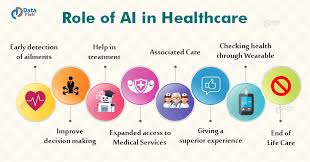
The future has arrived for some – and the impact is noticeable. Of the first thirteen interviewees, several organizations, including skilled nursing facilities, are stepping outside of technology comfort zones to solve problems – saving staff and management time and labor. They are predicting health issues of specific residents, both before and after move-in.  They are not relying on the broad Internet of data sources, where most of the negative commentary about AI is focused.  Instead are loading up their own data or importing external data and applying AI tools to solve problems. Here are some specific examples, in use today:

  • Generating care plans 
  • Producing chatbots for staff training
  • Scheduling workers
  • Analyzing toileting patterns and resident hygiene
  • Detecting sleep quality, vital signs and adjusting medication
  • Identifying acuity level prior to movein, to match staffing to residents.
  • Freeing staff to spend more time with those who need the most care.
  • Identifying CMS survey requirements by state.
  • Using motion information cameras, smart lamps, inroom and mattress sensors
  • Detecting behavior changes, falls and identifying possible fall risks

The future is here – and it is AI-enabled.  The application of machine learning, chatbots and other AI tools and features – is no longer just a future. More interviews will be conducted for this report, with the goal to publish some time in October, including naming the tech vendors mentioned in interviews. For those who have examples in senior care outside of the above list, it would be great to hear about them. At that time, interviewee quotes will be reviewed with them for publication along with the names of the companies participating.  The report will also be discussed at the Longevity Innovation Summit in Washington in December 2024.

Categories

login account