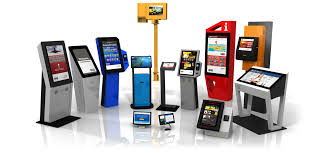
 You know the experience. You walk into the lobby of a medical practice, and the sign tells you to sign in at the kiosk. You drop your license in the slot – but the software is having a down day, and so a person emerges from behind the glass to debug it. Meanwhile another person checks you in. So their time savings from the device evaporate. The irritation of the patients trying to sign in grows – one announces how much he hates technology.
And so it was just another day in the land of tech process improvement. But kiosks are so popular in healthcare (“saving 15 minutes per patient!”), with growth of 16% in the next decade, that a persuasion economy has emerged to convince providers of their utility. Consider the population, though, that is walking into the clinic or medical office. The lobby is filling up with older adults who can’t stand (or stand for) the experience.
The kiosk is everywhere. It’s not just healthcare – the belief is that it will save labor has permeated and added an irritant to fast food restaurants, gas stations that are barely staffed at all, and retail settings. Not just the way in – also on the way out. As in a medical practice, they can both save staff time and irritate the customer. Optimism rules the day about the benefits of kiosks, and how those clearly outweigh the annoyance and mystification factor for customers. They encourage customers to spend more money – who wouldn’t like that?
But in healthcare, there is an extra-special absurdity. Your appointment date is approaching, and besides repeated text reminders about the date, you also must fill out profile information in a portal in advance (even if you’ve been there recently). On the day of your arrival, the registration kiosk presents uses much of the same information – apparently too busy to check if you entered it yesterday. The text reminders do not present you with what you already entered, so you must just check-in and hope for the best.
Kiosk plus portal plus Electronic Health Record verification – the patient’s chore. And for some healthcare organizations who do not like to use generally adopted EHR systems, they grow their own. That’s a lot of data entry and verification. Does the doctor look at this data? Not necessarily. But legal compliance pressures force them to collect it all, and verify again at every visit, even two days later. The day the kiosk is having a down day, the patients secretly rejoice – a person will actually have to interact with them after all.