
Which technologies show promise in helping older adults and adults with disabilities live safely and independently in their homes and communities?
05/08/2026
Did you know technology can also help streamline and improve your medical care?
04/22/2026
Tech can help with filling caregiving gaps and easing minds as America ages rapidly.
04/18/2026
The government delayed an overhaul to how it calculates Medicare Advantage payments.
04/14/2026
The robots are here. The transformation is still somewhere in the future.
 LeadingAge in San Diego and more. Entrepreneurs clearly see the opportunity for providing tech-enabled services to help care for older adults. Large events like Leading Age, Argentum, and sub-events within CES and HIMSS all point to the business potential that draws startups as well as new offerings from existing players – in what may become an increasingly crowded market. Here five recent announcements, two from the Startup Garage at Leading Age in San Diego -- adding three others from recent press releases. All information is drawn from the websites of the companies themselves.
 Medication non-adherence – it’s serious. This medication non-adherence (not filling prescriptions or missing dosages) is a
  October was a long and extravagant month for the tech market. Between trade events, including the
  How much time do we spend setting up our ‘smart’ phones? Every few years, I change phones. In the past, Android-to-Android, I wasted at least a full day customizing all the ‘improved’ features the way they were on the previous phone, setting up home screens, eliminating bloatware, and downloading apps that did not properly convert. This time, it took me most of 2 weekend days to set up an iPhone to join family photo sharing. The access to photos – that was one of the good parts. Otherwise, it was maddening and sent me out to forums again and again. I learned about the also-constant bug-fix upgrades, email addresses masquerading as Apple IDs (don’t get me started) and other apparently arbitrary design decisions whined about online. And then there was the stylistic non-charm of repositioning jiggling apps icons. But yay, now I see shared photos and learned how to
  You are increasingly likely to have a wearable -- around your neck or on your wrist. You may collect your own data for your own tracking and use. For those who see a wearable in a health context, they may be disappointed to know that their doctor doesn’t seem to care or know what to do with your heart rhythm data. But you can gain great benefit from tracking your performance (exercise, heart rate) – competing with yourself, and feeling the satisfaction from any improvement over time. What are the benefits of wearables today -- and in the future?
 Announcements of new offerings are arriving – will they/can they be used? Hopefully these 5 will offer benefit that can and will be realized by older adults. Writers of these 2019 articles about the topic are not so sure that new technologies for this population may not be reaching their intended audience. That can be due to a variety of barriers, including
  Hearing aids should appeal to those with significant hearing loss. It’s a given that hearing loss interferes with communication – which itself is a
  Fall and red leaves arrived as typical late in the month. But as inevitable as those changes are, other notable events occurred during September – including AARP’s
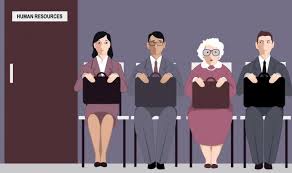 Getty images show advertising’s ageist stereotypes. A new report from AARP this week zeros in on something we all knew: