
Tech can help with filling caregiving gaps and easing minds as America ages rapidly.
04/18/2026
The government delayed an overhaul to how it calculates Medicare Advantage payments.
04/14/2026
The robots are here. The transformation is still somewhere in the future.
03/09/2026
CrossSense is one example of an assistive AI technology being developed by a co-operative in London.
03/08/2026
Helping them with their digital activities when user interfaces are constantly changing.
 January 2026 marks a notable milestone for senior care. In a few weeks, the oldest baby boomers begin to turn 80-- with a
  We all just want more effective help online. We want information, we need suggestions, even helping us with tasks by doing the work for us. Oh, and we would even like the advice to be timely and accurate! Over the past few years, as people were exploring
  cusp of the utility of AI agents. Ironically, or maybe not so much, that improvement is inversely proportional to the diminished availability of people to solve our problems. We see bits and pieces of the decline of people in processes we need. Whether it is the sign-in kiosk in the healthcare waiting room, the check-in process at the airport, automated creation of pharmacy refill requests, or the customer service ‘interface’ that is now nearly all AI. And screaming ‘agent’ may still not bring the actual person to the phone. What’s positive and likely? [Information is drawn from interviews about “The Future of AI and Older Adults 2030.” Scheduled to be published in early January 2026]
 January 2026 is just around the corner. And so will begin the wave of
  Aging in place makes the senior living industry anxious. A new article from
 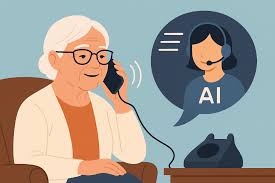 As interviews begin, ideas for the future of AI and older adults are emerging. For the updated report,
  Is everything now voice-enabled -- so that transition is done? Whine On. Is the response smart or, uh, just a response? Just tried an experiment, asking via Hey Siri for the best technologies to use for people with dementia. Got a nice and brief summary. Next pass, skipped the ‘Hey Siri’ part, asked the same question. This time it offered up the possibility of using ChatGPT which produced a long and useful list. So it appears
  The aging population has significant implications. Consider a few assumptions:
  You know the experience. You walk into the lobby of a medical practice, and the sign tells you to sign in at the kiosk. You drop your license in the slot – but the software is having a down day, and so a person emerges from behind the glass to debug it. Meanwhile another person checks you in. So their time savings from the device evaporate. The irritation of the patients trying to sign in grows – one announces how much he hates technology.
 The AI infrastructure juggernaut is on – consumers hesitate and deployment is cautious. Parallel tracks are emerging. Investment by the