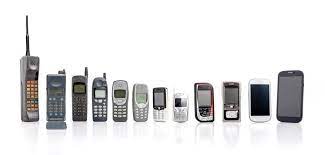
 The cell phone – imagine a connected life without it. The story of that invention, particularly the context of an AT&T monopoly of the time period, is instructive about what it takes to get an innovation into the market – when many are involved, including government agencies; and obstacles, in-house and competitors, are all around. According to interviews and his many anecdotes in his book, Cutting the Cord, Marty Cooper, aged 94, it was just one thing after the other to get the cellphone fully designed, manufactured, and into the marketplace as a mobile phone – when even his own company, Motorola, thought that the car phone market was the real opportunity. Motorola’s own estimates of the cell phone market opportunity in the 1970’s was a wild underestimation, predicting that millions of devices sold. Today the total number is closer to 18 billion phones worldwide. Many of those users in other countries own no other device.
No one knew that it would become as smart as it is today. Marty Cooper admits that he did not envision either the extent of use, nor Internet access, powerful cameras (virtually eliminating the need for an actual camera) -- or the many other uses a cell phone has today. His vision was portability -- no wired connection into the wall or the car -- for all. That seems obvious today, but at the time, the big innovation beyond land lines was the car phone – very popular in the 1970’s and gone, with the arrival of cell phone towers, in the 80s.
Pushed by carriers and policy, the dominance of cell phones was inevitable. Numerous companies began to compete as the history of the cell phone showed. The device became more powerful, smaller (and now larger), and so it has become the primary access device. Along the way, communication carriers, FCC and other government agencies played a key role – consider the 3G to 5G cutover, creating a threat to older adults with aging 3G clamshell (flip) phones, propelling many into a phone store, where nearly by default they became smartphone owners.
Today emergency connectivity increasingly depends on a mobile phone. Even from inside the home, by 2022, more than 70% of adults in US households were cellphone-only. And no wonder, as the federal requirement for telecom companies to support landlines ended in 2022. This was yet another push to change a technology that older adults relied on, forcing a move to an in-home VoIP phone which depends on Internet availability. And for the ultimate irony, young people may be buying flip phones to escape their smartphone-addicted lives.
[See latest 2023 report, The Future of AI and Older Adults]