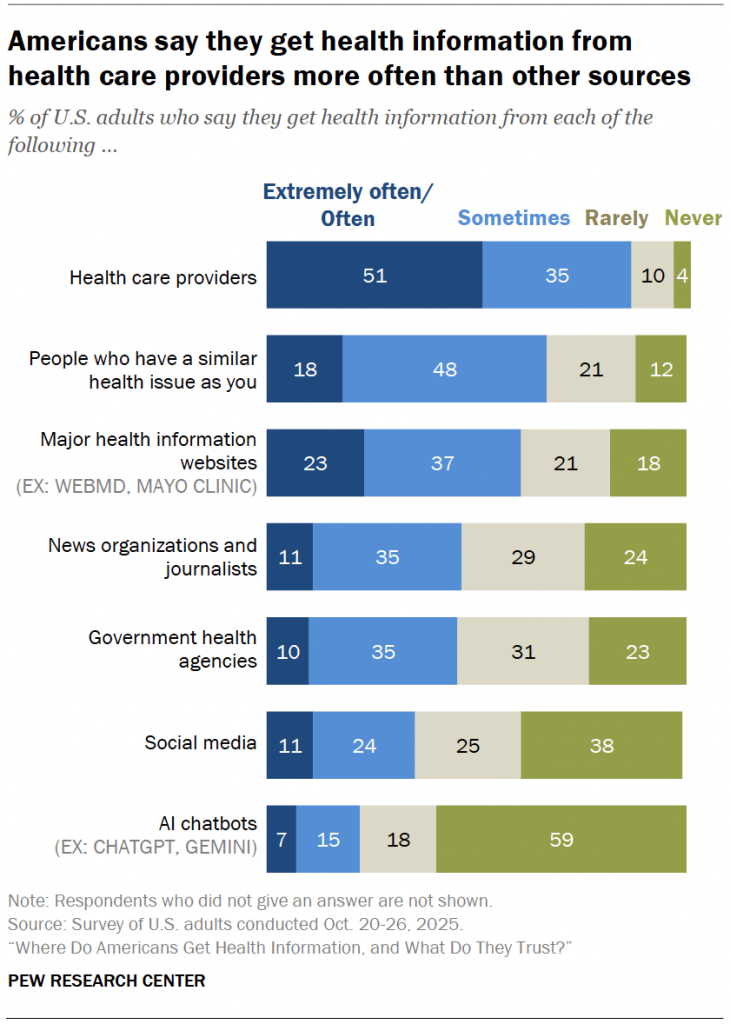
 The recent report from Pew deserves some thought – and much concern. First look at this chart – then consider (see Figure 1). Getting information from providers – that sounds positive and most think that information is accurate. Never mind that one-third of people in the US lack a primary care provider. But the survey results go downhill from there -- getting data from people who have a similar health issue to you (a neighbor?), then past WebMD, straight to government agencies tied with news organizations, and then, where else, over to social media. Half of Pew responders say it is difficult to judge whether information is accurate. No kidding.
And things could be worse: Okay, now over to a KFF poll – in that one, the youngest responders are the most confident in what they hear. YouTube, TikTok and Reddit get the highest confidence scores. Seriously? Maybe because they seem like neighbors? And they get health information even when they’re not looking for it – including from ‘influencers’ like Joe Rogan, Dr. Phil, Oprah Winfrey, Dwayne “The Rock” Johnson and Tucker Carlson. Really.
These two surveys are just the beginning of concern. People are quick to listen to whomever they are quick to listen to. The neighbor, Dr. Phil, or some ‘influencer’. That works well if we’re talking about ranking a popular song or movie. But diagnosing our health status from a comment made by an influencer – it sounds pretty appalling. And even when they find information in a so-called trusted source, how easy is to understand?
In the time of an 'astounding obesity surge' in the US – information is critical. According to a report identifying other measures of obesity beyond BMI, including body fat distribution, 70% of the population could be classified as obese, with the percentage rising to 80% among older adults over the age of 70. What information do people need that they may not be getting (or believing)? For example, better understanding of the role of drugs like GLP-1? The cost and health implications of its long-term use? The role of exercise and strength training as an alternative to medication? Surprisingly, both Joe Rogan (58) and Oprah (age 72) talk about their experience with strength training. Maybe as influencers, they could help impact the ‘surge’?
Figure 1 Pew Research April 2, 2026