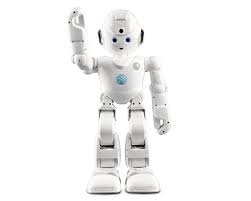
 Some subjects are perennials – like robots for older adults. Here we go again. This must be in some Fast Company editor’s standing list of topics – nothing else to write about so let’s do the robot-for-older-adults article again, this time written by futurists, comparing AI tech to physical robots – and asking real older adults what they think. You have to hand it to the interviewees – they know this is not a ‘robots’ topic. And they recognize ‘Advisor’ capability that already exists in Siri and Alexa – and that it is improving, though not (yet?) helping with human connections and isolation.
Despite enthusiasm about possibilities, the rest have little near term consumer potential. The ‘Butler’ category in the Fast Company article sounded good to older adults, but they appeared doubtful about how soon it would arrive. Outside of charming movies like Robot and Frank, and not-so-charming like Terminator, robots have not entered the consumer mainstream, despite lots of hype (at MIT) – remember Jibo? Even the very useful and interesting devices that move, like the table from Labrador Systems, are still traversing the tradeshow demo routes. Or as with nursing home robots, populating future use studies. The big reason? Especially in the US, to date, without subsidies for experiments, they have not scaled the insurmountable mountain of price, manufacturability, and ease of use for staff or care recipients.
But many AI-enabled capabilities for older adults are here now. Decoupling the word ‘robot’ from AI and observe the ever-growing list of offerings that are useful today. These include Safely You, VirtuSense, KamiVision, and OK2STANDUP. Companionship AI-enabled tools – like ElliQ. And then there are the CES 2025 products – Smart Headboard as well as a long list of new tech offerings, most AI-enabled. What is not happening, however, is the bundling of these alternatives into either suites of solutions, or even into a catalog of actual options matching the search algorithm.
Robotics (versus robots) are pervasive today. Consider prosthetics for people with disabilities, robotic arms for grabbing, or rehab tech. Consider the growing number of inventions in the past few decades -- there are multiple other categories where a person benefits from robotics, possibly assisted by AI/machine learning, can augment or replace a physical function. If engineering and innovation were the only criteria, the utility from robots and robotics would be obvious today. If the price tradeoff between robots and the scarcity of workers in the caregiving space was well articulated, as in this article – things would be moving along faster – and perhaps be thought of as a way to mitigate what is viewed, as in New York State, an impending care shortage disaster.