 What care delivery has seen an uptake in technology adoption? People imagined that post-Covid-19, technology would become much more compelling in all types of care delivery. And for sure, the pandemic institutionalized the role of in-home telehealth, with CMS reimbursement presumed to become permanent, or at least regularly renewed. In fact, 23% of respondents to a government survey had used telehealth during a 6-month period in 2021. Also for sure, the use of healthcare portals has seen increased penetration – in 2020, 60% of patients in the US were offered access to a portal, and 40% accessed their records through it.
What hasn’t changed much – tech deployment in senior care. "According to the 2020 Senior Living, COVID-19 and Technology Survey and Report, over a third of communities reported having poor or nonexistent Wi-Fi and bandwidth capability." We can assume that of those, the long-term care facility subset of percentage has even less Internet access for residents and patients. Bring-your-own-device is assumed.
Consider that the median costs of long-term care are higher than ever. Consider the Genworth data (see Figure 1) showing that it cost $108,405 for a private room in a nursing home in 2021, $61,776 for home health aide services, and $54,000 in assisted living. Looking into the state detail from Genworth, the costs of a private nursing home room in some states are startling – $165K in Connecticut, $153K in New York, $151K in Massachusetts. Note that Medicaid pays between 45-65% of nursing home costs in most states.
What role can technology play in lowering the cost of care? Searching, one finds little mention of technology for care outside of the hospital. In long-term care, optimizing administrative tasks is the notable recommendation. On the other hand, McMaster researchers see the possibilities in the use of remote monitoring, wearables, alarms and alerts systems, and family caregiver technology support. In fact, all have been discussed on this site, and many viable vendors have emerged: Remote monitoring, use of wearables, and smarter alarms and alerts that can reduce the burden on staff, just for starters. Reducing the burden on staff can lead to necessary optimizing of the staff, which can lead to reducing the number of staff required. Given the staffing crisis in long-term care, maybe technology’s time has arrived.
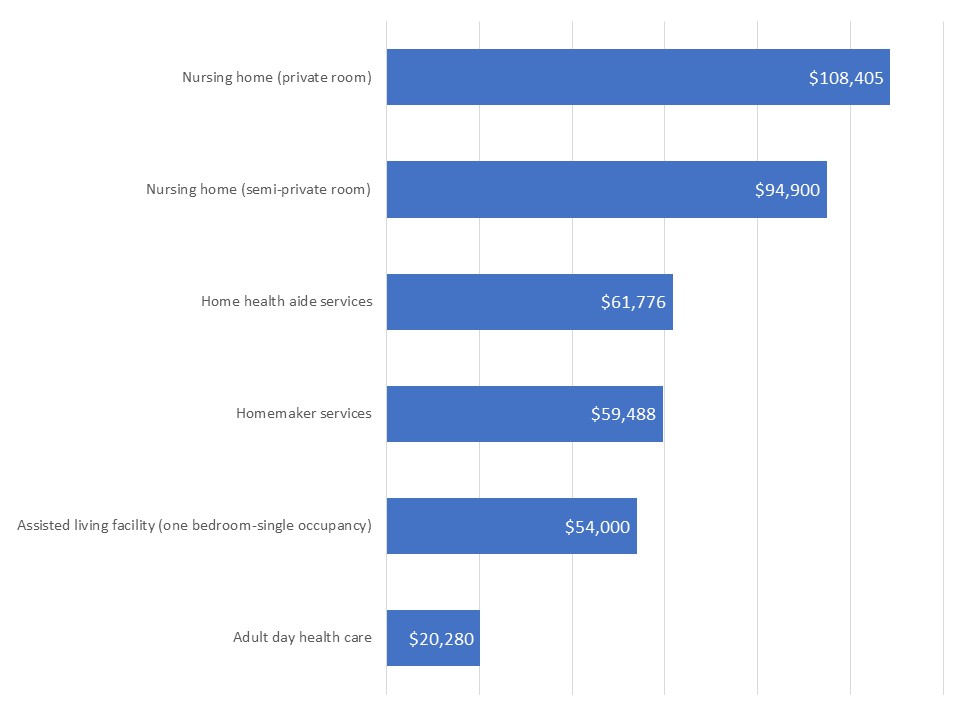
Figure 1 Annual Cost of Care, 2021 Source: Genworth Financial